Understanding the Problem
Systemic designers were re-deriving frames every project. There was no shared connective layer. You'd solve a wicked problem for one org, solve a similar pattern for another, and there was no way to see the connection. Knowledge was scattered, siloed, reinvented.
Context
- Systemic design community: practitioners at NGOs, public sector, enterprises, nonprofits
- Each org working on complex problems in isolation
- Knowledge wasn't being accumulated or transmitted
- Practitioners wanted: 'What's been tried for problems like this? What worked? What failed?'
Research InsightCuration is design. The act of choosing what to include, how to organise it, which connections to make visible — these are design decisions that shape how people think about systems. Practitioners don't need a tool catalogue; they need a thinking partner.
The 21m rear-separation rule — a 1902 modesty norm written into 1919 planning law — still spaces UK housing too far apart for courtyard cooling or cross-ventilation. A design choice nobody alive made is now a live climate-adaptation problem.
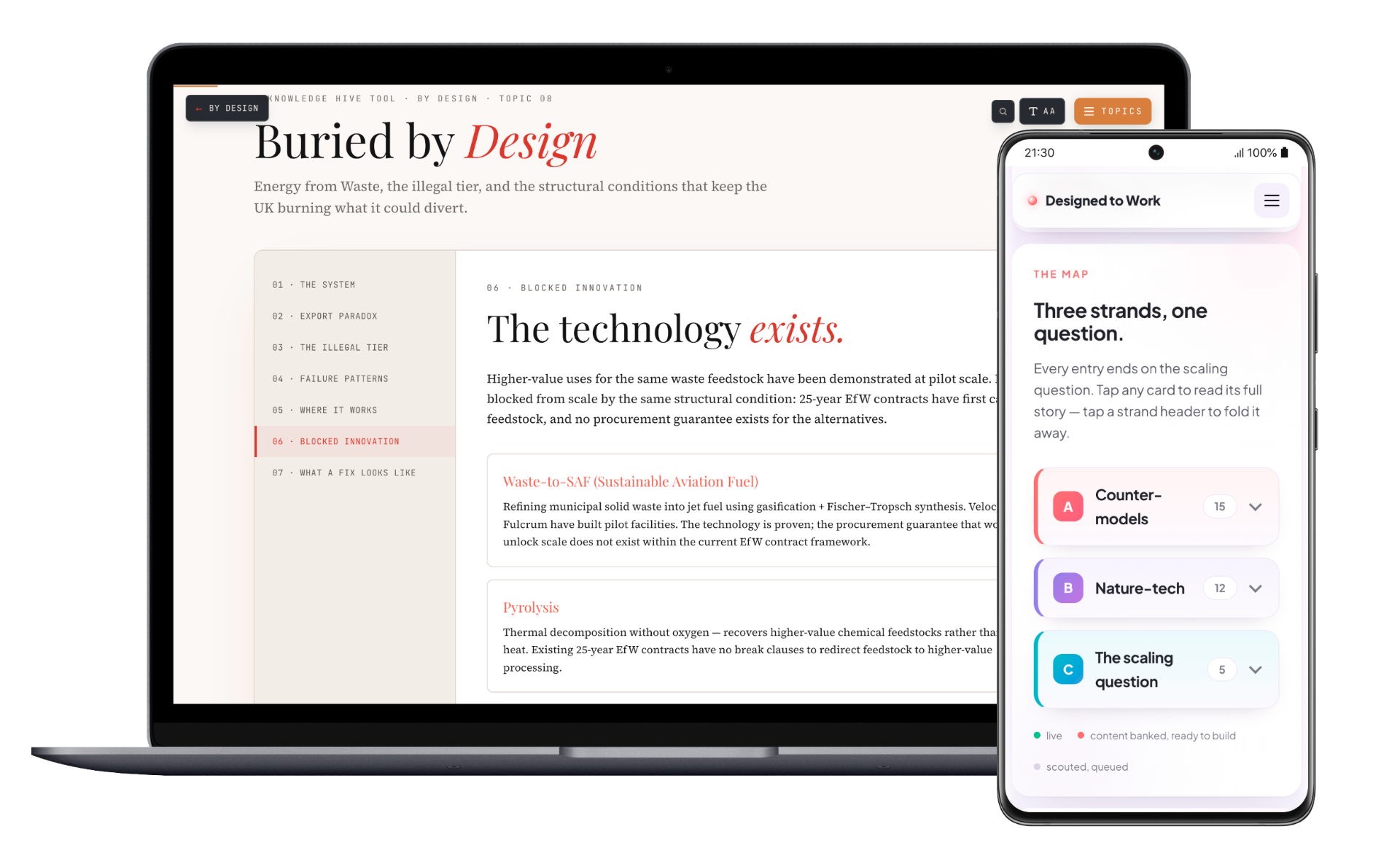
By Design — Systems explorer
Navigate diagnosis-first cases across sectors (1 of 2–3).
By Design — Systems explorer
Navigate diagnosis-first cases across sectors (1 of 2–3).
By Design — Secondary view
Companion exploration sitting alongside the systems explorer.
By Design — Secondary view
Companion exploration sitting alongside the systems explorer.
Build GD finder (secondary)
Secondary project born out of By Design — a finder for build/GD knowledge.
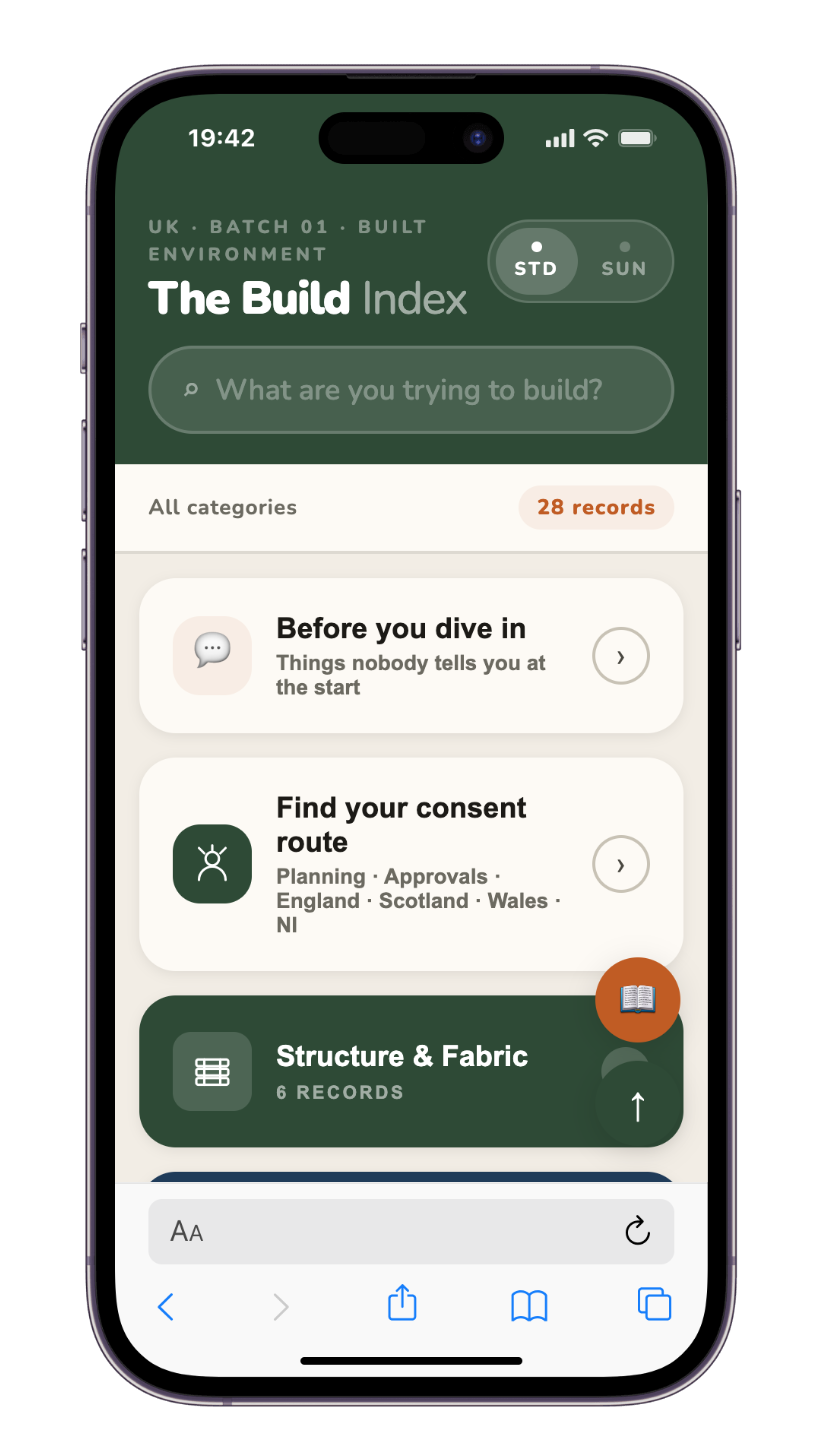
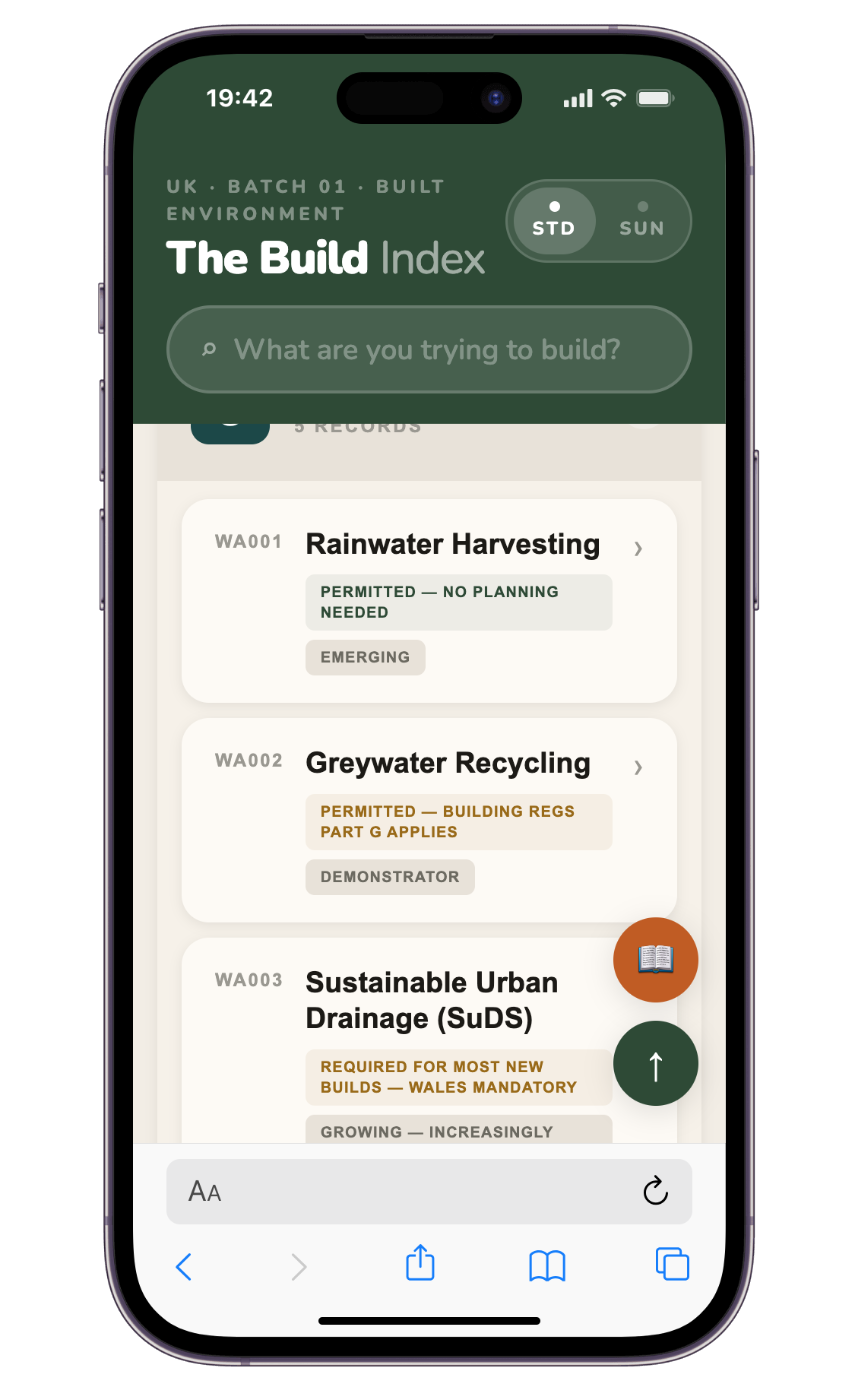
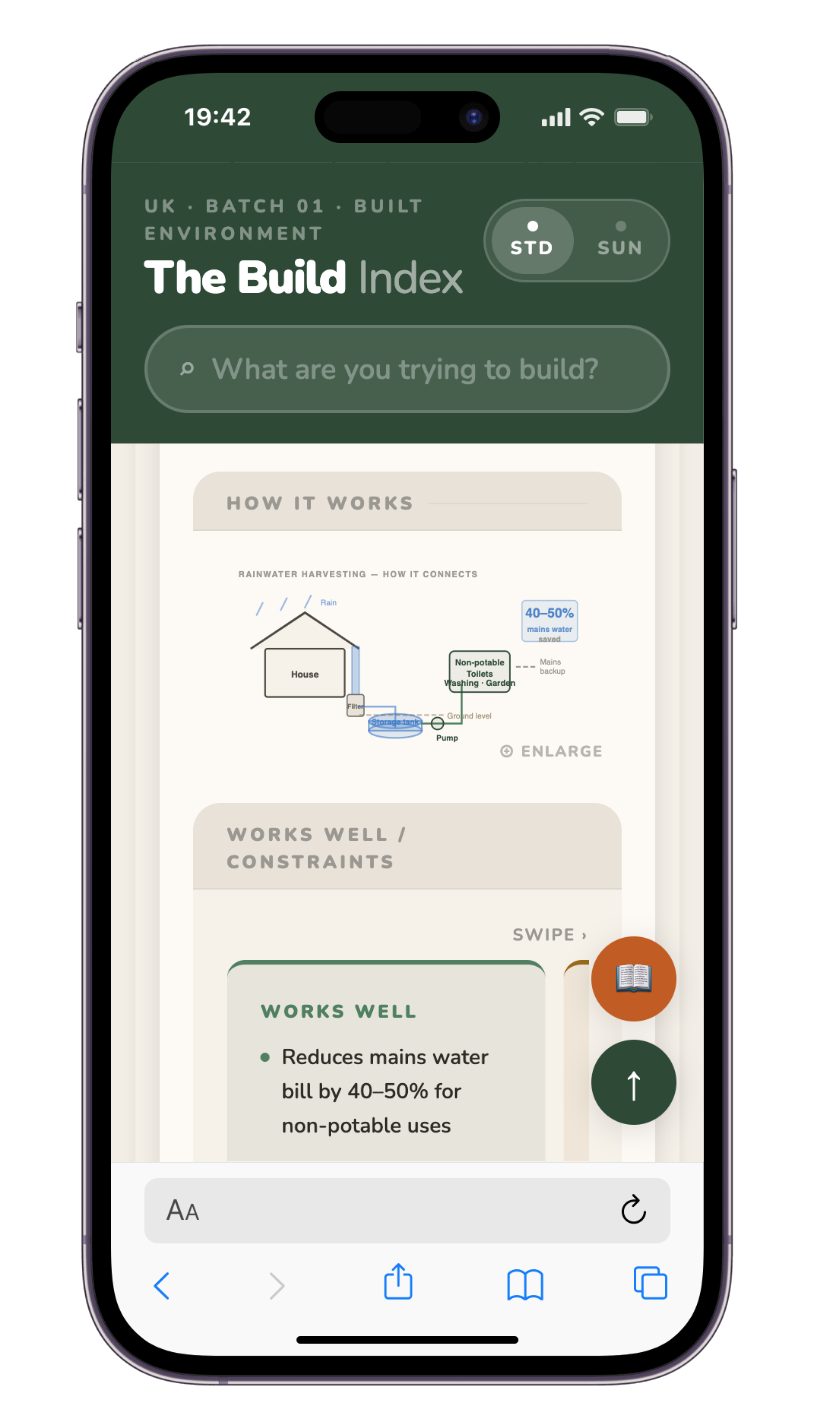
Build GD finder (secondary)
Secondary project born out of By Design — a finder for build/GD knowledge.
Index (secondary)
Secondary project born out of By Design — index navigator.
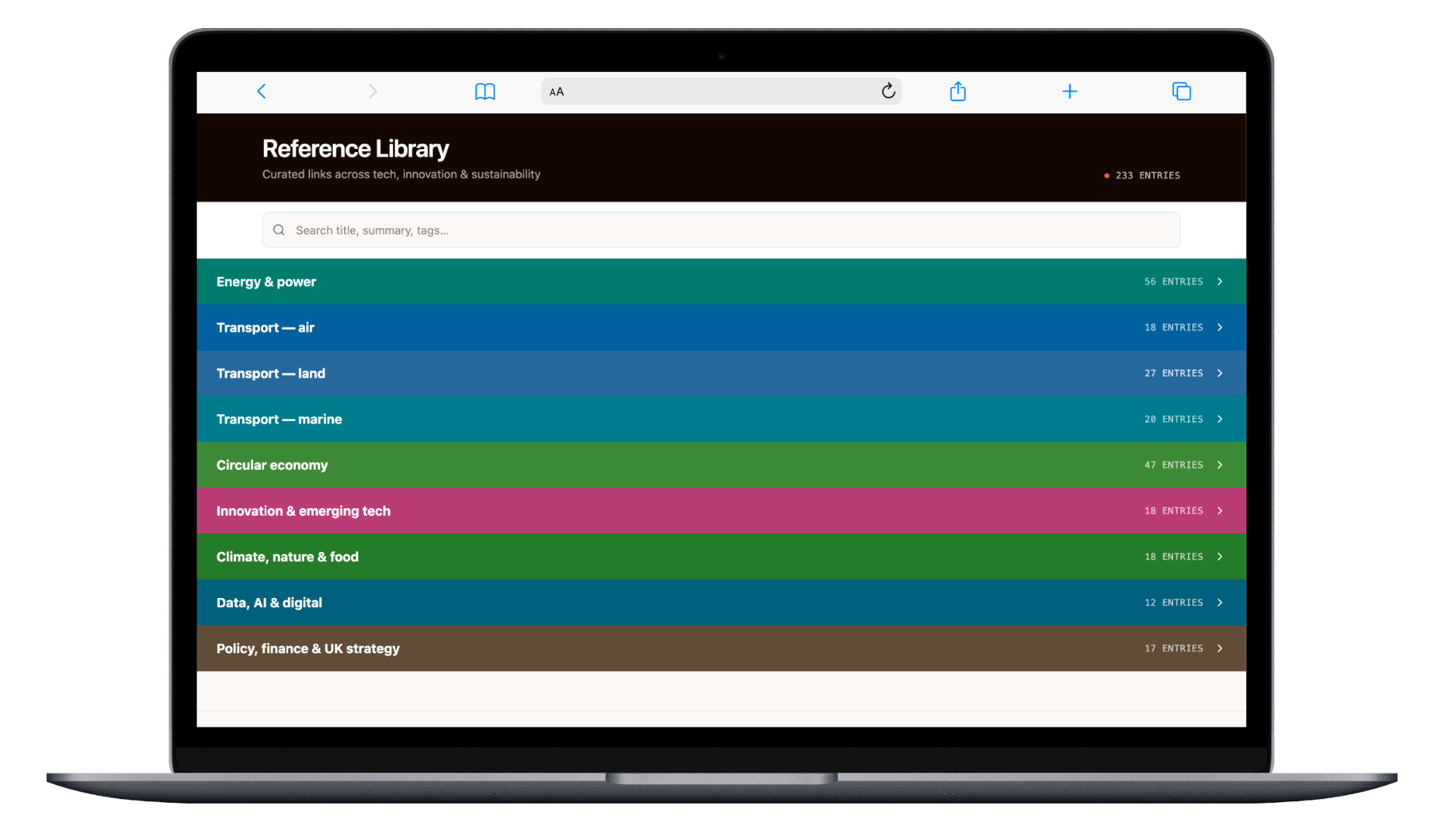
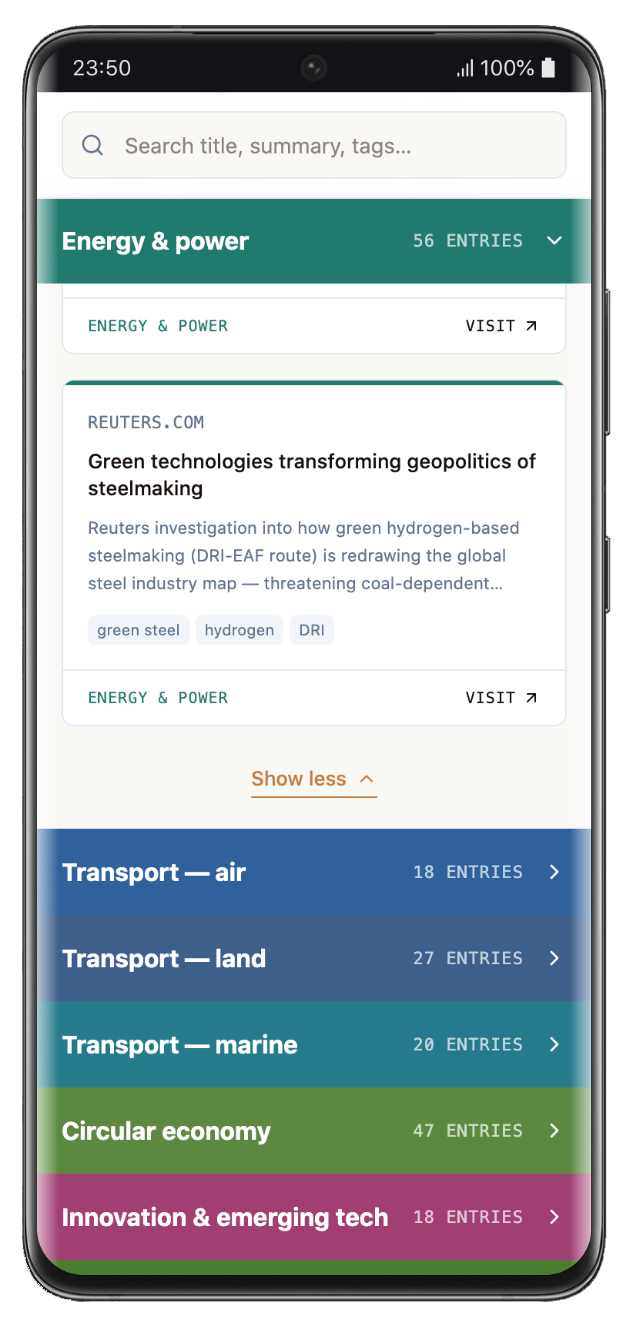
Index (secondary)
Secondary project born out of By Design — index navigator.
Quick reference index (secondary)
Secondary project born out of By Design — quick reference index.
Quick reference index (secondary)
Secondary project born out of By Design — quick reference index.
How I Tackled It
Curation is design. What I choose to highlight, how I organise it, which connections I make visible — these shape how people think about systems.
A curated navigation across cases and methods, structured around diagnosis-first inquiry rather than tool taxonomy.
Key Decisions
Diagnosis-First Organisation
Organised by problem pattern ('multi-stakeholder alignment', 'incentive misalignment', 'information fragmentation') — not by tool.
Why: Tools are interchangeable; patterns repeat. When you organise by pattern, you help practitioners see what they're really solving.
Cross-Sector Connection
Deliberately pull cases from different sectors. A SEND support system shares 'incentive misalignment' patterns with a healthcare supply chain.
Why: Innovation happens at intersections. A pattern solved in one sector often gets re-solved in another, poorly. Cross-sector visibility breaks that cycle.
Methodology Transparency
For each case: diagnosis, approach taken, what worked, what didn't, what they'd do differently. Not a sanitised success story.
Why: Practitioners want to learn from failures, not just successes.
Built through a mix of direct conversation with practitioners and independent research — for the more complex cases, patterns were surfaced from real-world context, then researched, cross-referenced, and verified before being organised into the knowledge base.